
Big 5 Safaris in Uganda: Animals, Places, Photos + Packages
Big 5 Safaris in Uganda Overview
The Big 5 Safaris in Uganda: Animals, Places, Photos, and Packages. Discover Uganda’s iconic wildlife, safari spots, stunning photos, and classic Big 5 packages. Uganda may be celebrated globally for mountain gorillas, but quietly and confidently, it also delivers one of East Africa’s most rewarding Big Five safari experiences. A Big Five safari in Uganda combines classic savannah wildlife viewing, rare conservation success stories, dramatic landscapes, and fewer crowds than its southern neighbors. This is safari without the rush: intimate, raw, and deeply authentic.
Home to the lion, leopard, elephant, buffalo, and rhinoceros, Uganda is one of the few African countries where all members of the Big Five can be seen on a single itinerary, thanks largely to the reintroduction of rhinos at Ziwa Rhino Sanctuary. With over 10 national parks and several wildlife reserves, Uganda boasts diverse ecosystems ranging from open plains to riverine forests, and the mighty Nile carving through its heart, offering a safari experience that feels both old-soul and quietly elite.
For travelers seeking a Big Five safari in Uganda, the reward is not just sightings but stories of conservation, resilience, and landscapes that still breathe freely.
What Are the Big Five, and Why Are They Called the Big Five?
The Big Five (lion, leopard, elephant, buffalo, and rhinoceros) were originally named by early African hunters as the five animals that were most dangerous and difficult to hunt on foot. The title had nothing to do with size and everything to do with risk. Each animal could charge, ambush, or kill without warning.
In modern safari tourism, the term has been ethically reclaimed. Today, the Big Five represent the pinnacle of African wildlife viewing, not conquest. Seeing all five in the wild is a benchmark experience, especially when it supports conservation rather than exploitation. Uganda’s Big Five story is particularly compelling because:
Uganda’s Big Five story is unique because it is not built on abundance alone, but on recovery and balance. While lions, leopards, elephants, and buffalo occur naturally in Uganda’s national parks, rhinos, once lost to poaching, have been carefully reintroduced through long-term conservation efforts. This makes a Big Five safari in Uganda not just complete, but deeply purposeful.
Where Can I Go for Big 5 Safaris in Uganda?
Murchison Falls National Park
Covering over 3,890 square kilometers, Murchison Falls National Park is the cornerstone of Big 5 safaris in Uganda. Located in northwestern Uganda and bisected by the Victoria Nile, it is the country’s largest national park and the most reliable destination for encountering four of the Big Five in one ecosystem.
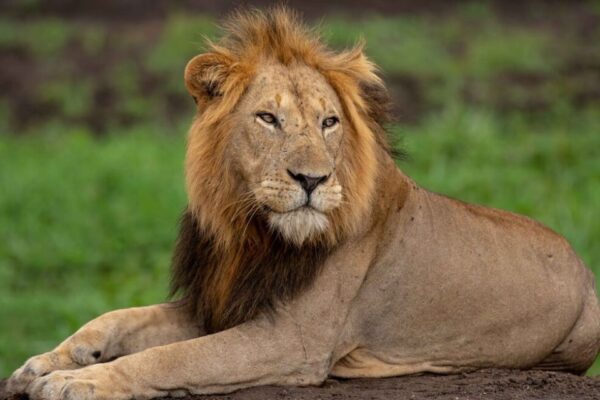
Home to over 76 mammal species and over 451 recorded bird species, the park supports large elephant populations, often seen moving in breeding herds across the open savannah, especially north of the Nile. African buffalo are also abundant and highly visible, while lions are regularly encountered in the Buligi and Delta plains, where prey is plentiful. And while elusive leopards are present throughout the park, especially along riverine woodlands and escarpments, sightings are strongest during early morning and late afternoon game drives.
What truly sets Murchison apart is its scale and rhythm. The park’s landscapes are expansive, wildlife movements feel natural rather than choreographed, and visitor crowds remain low, allowing for Big Five encounters that feel immersive rather than hurried.
Ziwa Rhino Sanctuary
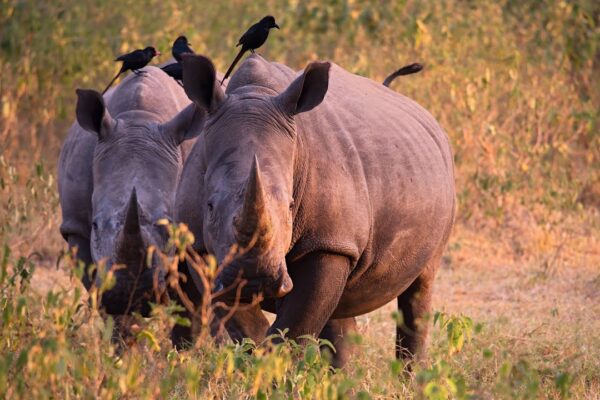
No Big Five safari in Uganda is complete without a visit to Ziwa Rhino Sanctuary, the only place in the country where rhinos can be seen in the wild. Situated in the northwest, about halfway between Kampala and Murchison Falls National Park, Ziwa plays a critical role in Uganda’s wildlife conservation story.
After rhinos were poached to extinction in Uganda by the early 1980s, Ziwa became the focal point of a long-term national reintroduction program. In 2005, the sanctuary was established to reintroduce southern white rhinos. Today, the sanctuary protects over 49 southern white rhinos, and this population is steadily growing, all free-ranging and closely monitored.
Rhino tracking at Ziwa is conducted entirely on foot under the supervision of armed, professionally trained rangers who work daily with the animals. Using fresh spoor, feeding signs, and wind direction, guides lead small groups through open grassland and woodland until the rhinos are located. Because the animals are individually monitored and range freely within the sanctuary, sightings are consistently high, making Ziwa the most dependable and controlled element of Uganda’s Big Five safari experience, and a benchmark for responsible rhino conservation in the region.
Queen Elizabeth National Park
Queen Elizabeth National Park is Uganda’s second-largest national park, covering 1,978 square kilometers in western Uganda along the Albertine Rift Valley. The park is the country’s most ecologically diverse park, with over 95 mammal species and more than 612 bird species. It is an important destination for Big 5 safaris in Uganda, particularly for lions, elephants, buffalo, and leopards.
Queen Elizabeth’s Kasenyi Plains are its main game-viewing area, known for their high concentration of lions, often seen hunting Uganda kob in open savannah. In the southern Ishasha sector, visitors may encounter the famous tree-climbing lions, a rare behavior where lions rest in large fig trees, likely to avoid heat and insects. Ishasha is one of the most reliable places in East Africa to encounter these lions.
Leopards are present throughout the park and are best seen on early-morning and evening game drives, while buffalo herds are large and stable. Meanwhile, several elephant herds can be seen moving between the park’s grasslands, forested areas, and riverine areas. Another vital location in the park is the Kazinga Channel, linking Lake Edward and Lake George, which supports one of Africa’s highest concentrations of hippos; the channel also offers excellent boat safaris with close views of elephants and buffalo, making Queen Elizabeth National Park one of Uganda’s most rewarding Big Five safari destinations.
Kidepo Valley National Park
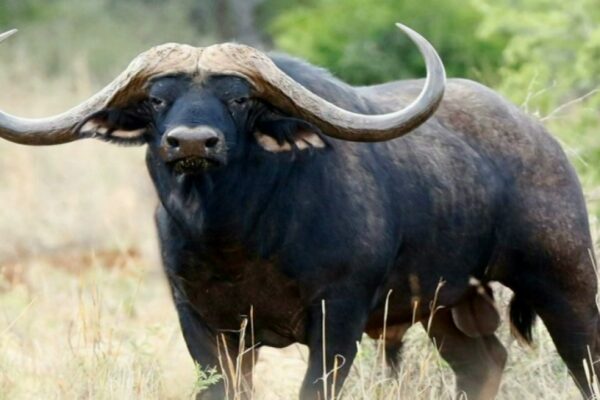
Remote and spectacular, Kidepo Valley National Park lies in Uganda’s far northeast near the borders with South Sudan and Kenya. Kidepo is not a complete Big Five park, but it is one of the strongest for lions and buffalo in Uganda. Covering about 1,442 square kilometers, the park supports some of the country’s largest lion populations, with frequent sightings in the Narus Valley and around water sources. Buffalo herds are also abundant and often form large groups, making them one of the most reliable Big Five sightings in the Kidepo Valley National Park. While elephants are present, they are often seasonal, mainly seen during the dry months near permanent water points. On the other hand, the park also hosts a range of leopards, although they are very elusive, so sightings are rare compared to other parks. However, the park does not have rhinos; nonetheless, it offers a strong, remote safari experience for seeing big game in a wild and uncrowded setting.
Lake Mburo National Park
Lake Mburo National Park is not a full Big Five destination, but it is one of Uganda’s most accessible parks for buffalo and leopards, and it offers a unique safari style that complements Big Five itineraries. Located in southwestern Uganda, the park covers over 260 square kilometers, making it the country’s smallest savannah national park. Lake Mburo is home to over 68 mammal species, including a large population of African buffalo, often seen grazing in open grasslands and along the lake shores.
While elephants, rhinos, and lions are absent, Lake Mburo allows walking safaris, night game drives, and horseback safaris, offering a more intimate way to engage with wildlife and enjoy an off-the-road safari experience. Leopards are present in the park but shy, with sightings more common during night game drives than daytime drives.
Types of Big 5 Safaris in Uganda
Big 5 safaris in Uganda are built around variety rather than volume, combining classic savannah game viewing with unique, hands-on wildlife experiences that are difficult to replicate elsewhere in East Africa.
-
Rhino Tracking Safaris – Ziwa Rhino Sanctuary
Rhino tracking at Ziwa Rhino Sanctuary is a core element of any Big Five safari in the country. This is the only place in Uganda where rhinos occur in the wild, following their reintroduction after national extinction in the 1980s.
Rhino tracking in Ziwa is a two-hour tour conducted on foot, led by armed rangers and conservation staff who monitor individual rhinos daily. Guests are led by professional guides and trackers who follow fresh tracks, dung, and feeding signs before approaching the animals at a safe distance. Due to close monitoring, sightings here are highly reliable due to close monitoring, and the experience focuses strongly on animal behavior, habitat use, and conservation, rather than speed or spectacle. Without Ziwa, any Ugandan Big Five safari remains incomplete.
-
Classic Savannah Game Drives
Traditional game drives form the backbone of Big 5 safaris in Uganda and take place primarily in Murchison Falls, Queen Elizabeth, and Kidepo Valley National Parks. Savannah game drives are conducted in customized 4×4 safari vehicles with professional guides familiar with local wildlife movements and park terrain.
Early morning and late afternoon drives offer the best chances of encountering lions and leopards, while elephants and buffalo are commonly seen throughout the day. Uganda’s parks are less crowded compared to its neighbors: Kenya, Rwanda, and Tanzania, allowing for longer and more immersive sightings, flexible positioning, and a more relaxed safari pace. This is particularly valuable for photography and first-time safari travelers.
-
Boat Safaris
Boat safaris are a defining feature of Uganda’s Big Five experiences and provide a different perspective on wildlife viewing. In Murchison Falls National Park, cruises along the Nile bring visitors close to large elephant herds, buffalo, and hippos as they gather along the riverbanks. In Queen Elizabeth National Park, the Kazinga Channel is known for exceptionally high concentrations of hippos, alongside frequent elephant and buffalo sightings.
These boat safaris in Uganda complement game drives by offering slow-paced viewing, strong photographic opportunities, and access to species behavior rarely seen from vehicles.
-
Walking Safaris and Experiential Drives
For travelers seeking a more immersive experience, walking safaris and guided nature walks, particularly in Lake Mburo National Park and Kidepo Valley National Park, respectively, offer insight beyond vehicle-based viewing. While Lake Mburo does not host all members of the Big Five, it supports buffalo and leopards and is ideal for learning and exploring the wilderness on foot while learning more about animal behavior, lifestyle, and ecosystem dynamics.
Lake Mburo is also known for night game drives, which increase chances of spotting nocturnal species and elusive leopards. These experiences add depth and variety to longer Big Five itineraries, especially at the beginning or end of a safari circuit.
When Is the Best Time to Go for Big 5 Safaris in Uganda?
Big 5 safaris in Uganda can be done throughout the year, but conditions are generally easiest during the drier months of June to September and December to February. In these periods, the vegetation is shorter, and animals such as elephants, buffalo, lions, and leopards are easier to locate in Murchison Falls, Queen Elizabeth, and Kidepo Valley National Parks. Road conditions are also better, allowing longer and more productive game drives.
However, the rainy months (March–May and October–November) bring lush scenery and fewer visitors for those who prefer intimacy and small crowds. Wildlife remains present, though sightings may take more time, especially in thick vegetation. Rhino tracking at Ziwa Rhino Sanctuary is available year-round, and boat safaris on the Nile and Kazinga Channel remain reliable regardless of season.
In practical terms, the dry seasons offer the most satisfying Big Five experience in Uganda, while the green seasons suit travelers who value quieter parks, scenery, and flexibility.
Explore Big 5 Safaris in Uganda: Top Big 5 Safari Packages
Explore big 5 safaris in uganda with three standout packages: a Murchison Falls + Ziwa Rhino combo (game drives, Nile boat cruise, and guided rhino trekking at Ziwa) for compact Big Five sightings; Queen Elizabeth (Mweya + Ishasha) for classic game drives, Kazinga Channel boat cruises, and legendary tree-climbing lions, perfect for photos and varied ecosystems; or the remote Kidepo Valley wilderness safari with wide savannahs, high wildlife density (lions, elephants, buffalo, and leopards), and cultural visits for an authentic, uncrowded adventure. All three Big 5 safaris in Uganda pair expert guides with flexible lodge or tented-camp options to suit comfort and budget, making these Big 5 safaris in Uganda ideal for photographers and first-time safari goers.
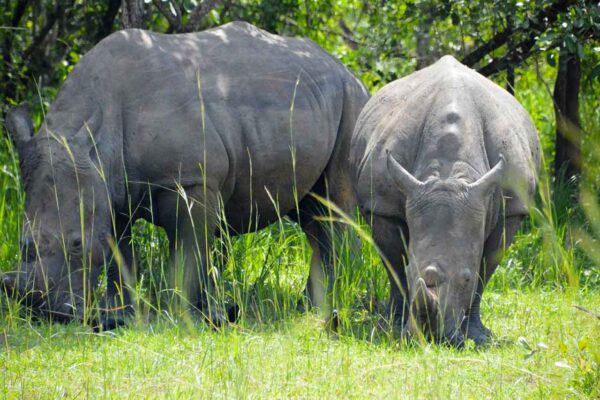
4-Day Murchison Falls & Ziwa Rhino Combo
Spectacular game drives and a Nile boat cruise at Murchison reveal elephants, lions, leopards, and buffalo. Ziwa Rhino Sanctuary adds guided rhino treks with expert rangers and conservation talks. Remote camps, dramatic river scenery, and knowledgeable guides make this compact four-day Big Five experience efficient and offer stunning close-ups.
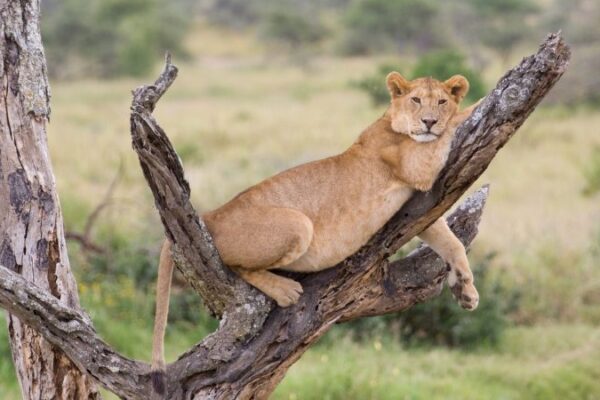
3-Day Queen Elizabeth (Ishasha) & Kazinga Cruise
Explore Queen Elizabeth’s savannahs and Ishasha for famous tree-climbing lions, then relax on a Kazinga Channel boat cruise alive with hippos and buffalo. Game drives often reveal elephants and leopards. Comfortable lodges or tented camps provide sunset views, expert guides, and excellent photography opportunities for a memorable three-day safari experience.
5-Day Kidepo Valley Wilderness Safari
Vast, remote Kidepo Valley offers cinematic game drives across golden savannahs where lions, elephants, and large buffalo herds roam. Leopard sightings are excellent, and visitor numbers are low. Cultural visits to Karamojong communities add depth. Rugged camps, dramatic vistas, and expert trackers create a raw, authentic five-day Big Five-style adventure experience.