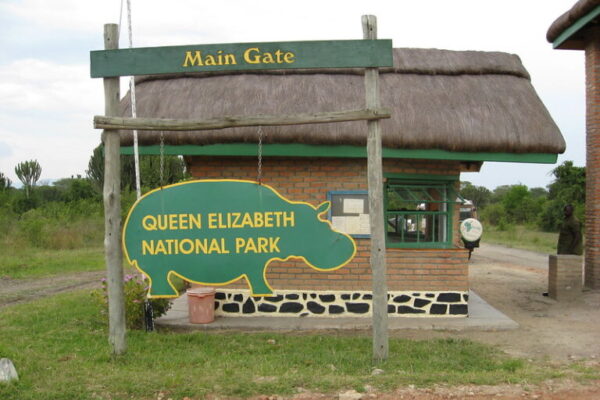
Incredible Guide To Queen Elizabeth National Park in Uganda.
Queen Elizabeth National Park
Overview
Queen Elizabeth National Park is one of Uganda’s most significant safari parks because it offers a real variety in a single destination. Few places in the country combine open savannah, wetlands, crater lakes, forest, and a major water channel – and one of Africa’s most wildlife-rich waterways.
Located in western Uganda, along the Albertine Rift, the park is renowned for its strong populations of elephants, buffalo, antelope, lions, and hippos, as well as its exceptional bird diversity. The Kazinga Channel alone supports one of the highest concentrations of hippos in Africa and anchors much of the park’s wildlife activity. Nonetheless, this park’s popularity lies in its ability to offer a variety of core safari experiences: from classic savannah game viewing, and wildlife-rich boat safaris on the Kazinga Channel to birding and primate tracking experiences within one continuous and easily navigable landscape.
About Queen Elizabeth National Park
Queen Elizabeth National Park sits in western Uganda, straddling the floor of the Albertine Rift Valley (a corridor of wildlife and water that begins near the Rwenzori Mountains and stretches southward into East Africa). The park lies between Lake George to the north and Lake Edward to the south, linked by the sinuous Kazinga Channel, and shares its western boundary with the Democratic Republic of the Congo (DRC).
Queen Elizabeth was officially gazetted in 1952 as Kazinga National Park to protect the wildlife and ecosystems around lakes George and Edward. Following a visit by Queen Elizabeth II in 1954, it was renamed Queen Elizabeth National Park in her honour.
Covering approximately 1,978 square kilometres, Queen Elizabeth is among Uganda’s largest protected areas, second only to Murchison Falls National Park. Within that span, the park boasts expansive savannah grasslands, floodplain and lakeshore wetlands, dense tropical forests, scattered Acacia woodlands, and dramatic volcanic explosion craters – a blend of landscapes that supports over 95 mammal species and over 600 bird species.
How to Get to Queen Elizabeth National Park
Queen Elizabeth National Park is easily accessible by both road and air, making it a practical inclusion on most western Uganda safari circuits.
- By Road
From Kampala, the park is approximately 400 km away and can be reached in 6 to 8 hours, depending on traffic and route. The most commonly used access points are via Mbarara–Bushenyi–Kasese or Fort Portal–Kasese, both well-established safari routes. The roads are generally tarmac up to Kasese or Bushenyi, with short gravel sections when entering the park.
- By Air
There are scheduled and chartered flights that operate from Entebbe International Airport (EBB) or Kajjansi Airfield to Mweya, Kasese, or Ishasha airstrips. Flight time is approximately 1 to 1.5 hours, offering a fast and comfortable option, particularly for short safaris or luxury itineraries.
- Getting Around the Park
Once inside the park, movement is by a 4×4 safari vehicle. Distances between sectors: Kasenyi, Mweya, Ishasha, and Kyambura are manageable, allowing travelers to combine activities without excessive driving.
Wildlife & Attractions in Queen Elizabeth National Park
Wildlife in Queen Elizabeth NP
Queen Elizabeth National Park supports over 95 mammal species, including four of the African Big Five (African elephants, Cape buffalo, lions, and leopards), as well as Uganda kob, warthogs, waterbuck, topi, hippos, spotted hyenas, and Nile crocodiles. The park is especially well known for its tree-climbing lions in the Ishasha sector – one of the few places in Africa where lions regularly climb into fig and acacia trees.
Birdlife in Queen Elizabeth NP
Queen Elizabeth National Park is Uganda’s most important birding destination, with over 612 recorded bird species – one of the highest counts of any national park in Africa. This exceptional diversity is driven by the park’s varied habitats, including wetlands, open savannah, crater lakes, riverine woodland, and tropical forest. Key species regularly seen include African fish eagle, African skimmer, saddle-billed stork, shoebill (occasionally in wetland areas), pink-backed pelican, grey-crowned crane, and large numbers of waterbirds along the Kazinga Channel. The park’s forested areas, such as Maramagambo and Kyambura, support Albertine Rift endemics, including the Rwenzori turaco and other specialized forest species.
Mweya Peninsula
Perched between Lake George and the Kazinga Channel, the Mweya Peninsula acts as the main hub for park activity in Queen Elizabeth National Park. Its vantage points overlook both waterways and attract elephants, buffalo, hippos along the riverbanks, and waterbirds. Mweya also serves as the launch point for boat safaris along the Kazinga Channel.
Ishasha Southern Sector
Located about 100 km south of Mweya, Ishasha is a remote wilderness area famous for its tree-climbing lions, which are often seen resting on low tree branches in the afternoon. The broad savannah plain also supports buffalo, topi, kobs, elephants, and a variety of grassland bird species.
The Kazinga Channel
Linking two of Uganda’s Great Lakes – Edward and George, this 32-kilometre natural freshwater way supports one of the highest concentrations of hippos on the planet and Nile crocodiles. The channel is best explored on boat safaris, which offer close views of hippos, crocodiles, and elephants drinking at the water’s edge, as well as abundant birdlife on the shoreline throughout the year.
Kasenyi Plains
The Kasenyi Plains lie to the east of the Kasese road and are a classic savannah view in Queen Elizabeth National Park. This open grassland is home to large herds of Uganda kob, buffalo, elephants, and lions, offering some of the best game viewing encounters for predator-prey action. The plains’ wide panoramas also support grassland birds like grey-crowned cranes and other raptors.
Kyambura Gorge
Known as the “Valley of Apes,” Kyambura Gorge is a forest-edged gorge on the park’s northeastern boundary, home to a range of primate species, including habituated troops of chimpanzees. Visitors can enjoy guided walks through the gorge to see these chimps in their natural habitat, as well as colobus and red-tailed monkeys, among other primates. This lush gorge also attracts forest bird species.
Maramagambo Forest
Located north of Queen Elizabeth National Park, Maramagambo Forest is the largest tract of lowland tropical rainforest in the region. The forest shelters a range of primates, including chimpanzees, monekys and forest birds like the forest flycatcher and Rwenzori turaco. The forest is also known for eco-tourism activities, including primate walks, bird watching, and guided hikes to the notorious bat caves, and scenic crater lakes (Lake Kyasanduka and Lake Nyamasingiri).
The Equator & Queen’s Pavilion
The Equator Crossing & Queen’s Pavilion
The Equator crossing is located along the Kasese–Mbarara road near the park’s northern sector and marks the latitude of 0°, offering a well-known geographical stop for visitors entering or exiting the park. Adjacent to it stands the Queen’s Pavilion, a small historic structure built in the 1950s to commemorate the visit of Queen Elizabeth II to the park. While not a wildlife site, this stop adds historical context to the park and provides a brief break for photography, orientation, and rest.
Top Things to Do in Queen Elizabeth National Park
- Safari Game Drives
Game drives in Queen Elizabeth National Park are the foundation of wildlife viewing and are best undertaken early morning or late afternoon when animals are most active. Routes through the Kasenyi Plains, Mweya Peninsula, and Ishasha Sector offer high chances of seeing elephants, buffaloes, Uganda kob, warthogs, waterbuck, and, with luck, lions or leopards. Guides position vehicles along known paths and water sources to maximize sightings.
- Boat Safaris on the Kazinga Channel
Boat safaris on the Kazinga Channel are the highlight of visiting Queen Elizabeth National Park. The channel’s calm waters are home to large concentrations of hippos and Nile crocodiles, but it also draws many elephants, buffalo, and other grazers, which can be seen at the shores. Birdlife along the channel is also prolific, making this a rich combination of aquatic and terrestrial wildlife viewing. Most cruises last around 2 hours and offer unmatched photographic opportunities.
- Chimpanzee Trekking in Kyambura Gorge
Kyambura Gorge offers an immersive forest experience where visitors can track habituated chimpanzees in their natural habitat. Guided treks typically last 2 to 4 hours, requiring moderate fitness as the trails descend into the gorge and wind through dense tropical forest. Along the way, trekkers may also spot red-tailed monkeys, olive baboons, forest duikers, and a variety of Albertine Rift Forest birds. Chimpanzee trekking in Kyambura Gorge provides both intimate wildlife encounters and a chance to explore one of the park’s most ecologically rich areas.
- Explore Tree‑Climbing Lions in Ishasha
The Ishasha Sector in the far south of Queen Elizabeth is famous for its tree-climbing lions – a rare behaviour where lions rest in fig and acacia trees during the heat of the day. Early morning or late afternoon and evening drives through this broad savannah plain are ideal for spotting these lions, along with herds of topi and kobs.
- Birdwatching
Queen Elizabeth National Park is one of Uganda’s top birding destinations, with over 612 bird species recorded. Birdwatchers find an excellent variety around the Kazinga Channel, crater lakes, savannah plains, and forested areas like Kyambura Gorge and Maramagambo Forest. The best time for birding in Queen Elizabeth National Park is early morning, generally between dawn and 10:00 AM, and late afternoon/evening, as birds are most active, feeding, and vocalizing during these cooler hours. While both times are excellent, the early morning often provides the best opportunity for spotting a high diversity of species.
- Guided Forest Walks
Guided walks in Maramagambo Forest and other wooded areas of Queen Elizabeth National Park allow visitors to explore the park on foot, offering a closer look at its smaller wildlife, diverse bird species, and unique forest ecosystems. Led by experienced rangers, these walks typically follow established trails through shaded rainforest, past the bat-inhabited caves, swampy areas, and the scenic volcanic crater lakes within the forest.
Best Time to Visit Queen Elizabeth National Park
Queen Elizabeth National Park can be visited year-round, but the experience varies depending on the season.
- Dry Seasons (December – February & June – September)
These months offer the best wildlife viewing in Queen Elizabeth National Park as animals concentrate around water sources and vegetation is less dense, making game drives, boat safaris, and other activities easy. Moreover, roads are also more navigable, ensuring smooth travel around the park.
- Wet Seasons (March – May & October – November)
While the rains make some roads muddy and movement difficult, Queen Elizabeth transforms into a verdant landscape, ideal for birdwatching and photography. The wet seasons also attract migratory birds and result in fuller lakes and wetlands, enhancing Kazinga Channel boat safaris.
In short, the dry season is preferred for classic safari experiences, while the wet season is rewarding for birding, scenery, and fewer crowds. Both offer unique perspectives of the park’s rich ecosystems.
Accommodation in Queen Elizabeth National Park
- Luxury Accommodation
Mweya Safari Lodge – Located on the Mweya Peninsula, this iconic luxury lodge overlooks the Kazinga Channel and provides guests with spectacular sunset views over Lake Edward. It features spacious rooms, a swimming pool, and a restaurant serving both local and international cuisine. Mweya Safari Lodge is ideal for travelers who want a combination of comfort and convenience, with easy access to boat safaris and game drives.
Ishasha Wilderness Camp – Set deep in the Ishasha Sector near the southern border of the park, this luxury tented camp offers exclusive access to tree-climbing lions and remote savannah plains. Each tent has ensuite facilities and elevated views of the surrounding landscape. It is perfect for visitors seeking intimate safari experiences away from the main lodge area
- Mid‑Range Accommodation
Enganzi Game Lodge Limited – Perched on a scenic escarpment overlooking the plains, Enganzi Game Lodge provides comfortable cottages and private verandas for wildlife viewing. Guests can spot elephants, buffalo, and antelope wandering near the lodge. The lodge balances affordable comfort with a strong safari experience, making it a favorite among families and small groups.
Buffalo Safari Lodge – Located near the Kazinga Channel, this lodge combines riverside views with comfortable accommodation and a pool. Its location makes it excellent for morning and evening boat safaris, as well as game drives through Mweya and Kasenyi. Guests enjoy value-driven comfort while staying close to wildlife hotspots.
Budget Accommodation
Bush Lodge – Located near the park’s Kasese area entrance, Bush Lodge offers comfortable bandas and budget cabins with easy access to main game drive routes and the Kazinga Channel. The lodge is a great choice for travelers who want a simple, relaxed base from which to explore the park without high prices or long transfers. The lodge also provides meals, safari bookings, and a communal atmosphere that’s friendly for solo travelers and small groups alike.
Simba Safari Camp – Situated close to the park boundary near Katunguru, Simba Safari Camp provides budget-friendly tents and bandas that still deliver a genuine safari atmosphere. The camp is strategically located for game drives in Mweya and Kasenyi and offers easy access to boat safaris on the Kazinga Channel. Guests at Simba Safari Camp enjoy practical amenities, on-site dining, and a communal camp vibe that works well for couples, friends, and small groups.